


Your Professional Titanium Plate Supplier
Our goal is to be your reliable partner for titanium plate in China. As a national high-tech enterprise, we specialize in the research, development, manufacturing, and global supply of titanium alloy materials for high-end medical devices. We have a skilled engineering team dedicated to refining every stage, from product development and process improvement to production oversight, ensuring every product delivered meets rigorous quality and performance standards. The price is competitive and the product is quality-assured, which is a good choice for your long-term cooperation.


Why Choose Us
Our certifications
We hold ISO 9001/ISO 13485, FDA, CE, ISO 14001, and ASTM F67/F136 international standards certifications.
Quality control
We utilize an OES spectrometer to test titanium components to ensure purity and maintain strict limits for impurity elements (Fe, O, N, etc.). We also provide third-party testing reports (SGS/BV) and can provide special certifications such as medical grade (ELI) upon request.
Our services
Our team of experts will recommend the most suitable products according to customer needs and provide detailed consultation, we ensure timely delivery, and we provide long-term service support.
Advantages of Titanium Plate
Exceptional strength-to-weight ratio
This means that despite being incredibly strong, titanium plate is relatively lightweight compared to other metals. This property makes it an ideal choice for applications where weight reduction is crucial, such as aerospace and automotive industries. The use of titanium plate in these sectors allows for increased fuel efficiency and improved overall performance.
Excellent corrosion resistance
Titanium is highly resistant to corrosion, even in harsh environments, making it suitable for applications where exposure to corrosive substances is a concern. This property is particularly valuable in industries such as chemical processing, marine, and offshore oil and gas, where equipment and structures are constantly exposed to corrosive elements.
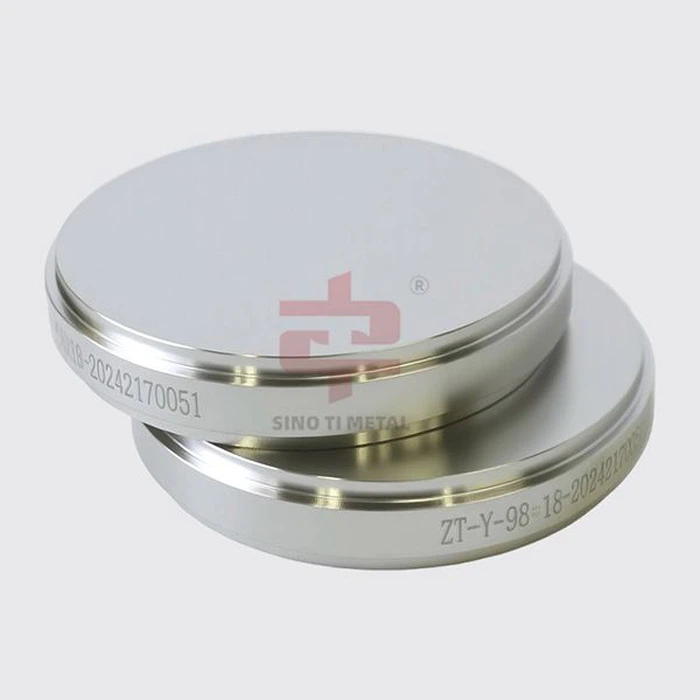
Specification of Titanium Plate
|
General Specs |
|
|
Size |
1000x200mm |
|
Thickness |
0.1mm to 100mm |
|
Tensile Strength |
967MPa(≥825MPa) |
|
Yield Strength |
871MPa(≥760MPa) |
|
Density |
4.51g/cm3 |
|
Hardness |
293 (HV) |
|
Elongation |
20.5%(≥8%) |
|
Reduction of Area |
47%(≥15%) |
|
Enforce Standard |
ASTM F67/ASTM F136 / ISO 5832-2/ISO 5832-3 |
|
Shape |
Square |
|
MOQ |
1pcs |
|
Surface |
Bright |
|
OEM |
Available |
|
Grade |
Grade 2,Grade 5,Grade 5,Eli,Grade 23 |
|
Lead Time |
In stock |

Medical titanium plates are key implant materials in the fields of orthopedics, maxillofacial surgery, etc. Their core characteristics and clinical applications have good biocompatibility, mechanical adaptability, and corrosion resistance.
The annual corrosion rate in body fluid environment is <0.002mm, which is better than stainless steel (0.01mm/year), and has high long-term stability. The release of toxic elements such as aluminum and vanadium is strictly limited (such as TC4ELI ultra-low interstitial element level).
Application of Titanium Plate
Aerospace field: Titanium and its alloys are essential structural materials in aerospace, finding applications in aircraft components like fuselages, wings, engine covers, and landing gear. They are also used in rocket engine components such as turbine blades and blade rings.
Shipbuilding field: Titanium plates are utilized in shipbuilding due to their outstanding mechanical properties and corrosion resistance. They can be found in ship bulkheads, bottom plates, and decks.
Chemical industry: The chemical industry increasingly employs titanium and titanium alloy products, including exchangers, reaction towers, synthesizers, and autoclaves. These materials are used in petrochemical, fiber, pulp, chemical fertilizer, electrochemistry, and seawater desalination industries.
Electrolysis: Titanium plates are widely employed in electrolysis processes due to their corrosion resistance, electrical conductivity, and mechanical properties. They serve as electrodes in various electrolytic processes such as metal electrolytic preparation, electroplating, and electrolytic processing.
Seawater desalination field: Titanium plates are commonly used in desalination processes, particularly in reverse osmosis (RO) and electrodialysis (ED) technologies. Their corrosion resistance and durability make them ideal for withstanding the harsh conditions involved in desalination.
Production Process of Titanium Plate


Hot forging: It is a forging process carried out above the metal's recrystallization temperature. The purpose is to shape the titanium material through plastic deformation at high temperatures.
Hot rolling: This is a rolling process that occurs above the recrystallization temperature. The titanium billet is heated to a temperature higher than the recrystallization temperature and then passed through a series of rollers. The rollers gradually reduce the thickness of the material and change its shape into a plate.
Cold rolling: It is a rolling process in which the plastic deformation temperature is lower than the recovery temperature. Cold - rolled titanium plates have a more accurate thickness and better surface smoothness. Through cold rolling, the mechanical properties of the titanium plate can also be adjusted to a certain extent.
Annealing: It is a metal heat - treatment process in which the metal is slowly heated to a certain temperature, held for a sufficient period of time, and then cooled at an appropriate speed (usually slow cooling, sometimes controlled cooling). For titanium plates, annealing can relieve the internal stress generated during the previous forging or rolling processes.
Pickling: This process involves immersing the workpiece in an aqueous solution such as sulfuric acid to remove oxide films and other substances on the metal surface. It is a pretreatment or intermediate treatment for processes such as electroplating, enameling, and rolling.
Packing and Shipping of Titanium Plate
|
Packing |
Tray |
|
Shipping |
Shipped by road, sea, rail |
FAQ
We're professional titanium plate manufacturers and suppliers in China, providing high quality customized products with reasonable price. We warmly welcome you to buy titanium plate in stock here from our factory. Contact us for free sample.
titanium alloy plate, 6al 4v titanium plate, Medical Titanium Foil